Procedural British Neighbourhood
A two-stage Houdini Engine pipeline for creating a baked building library and assembling a British neighbourhood in Unreal Engine 5.
Project Overview
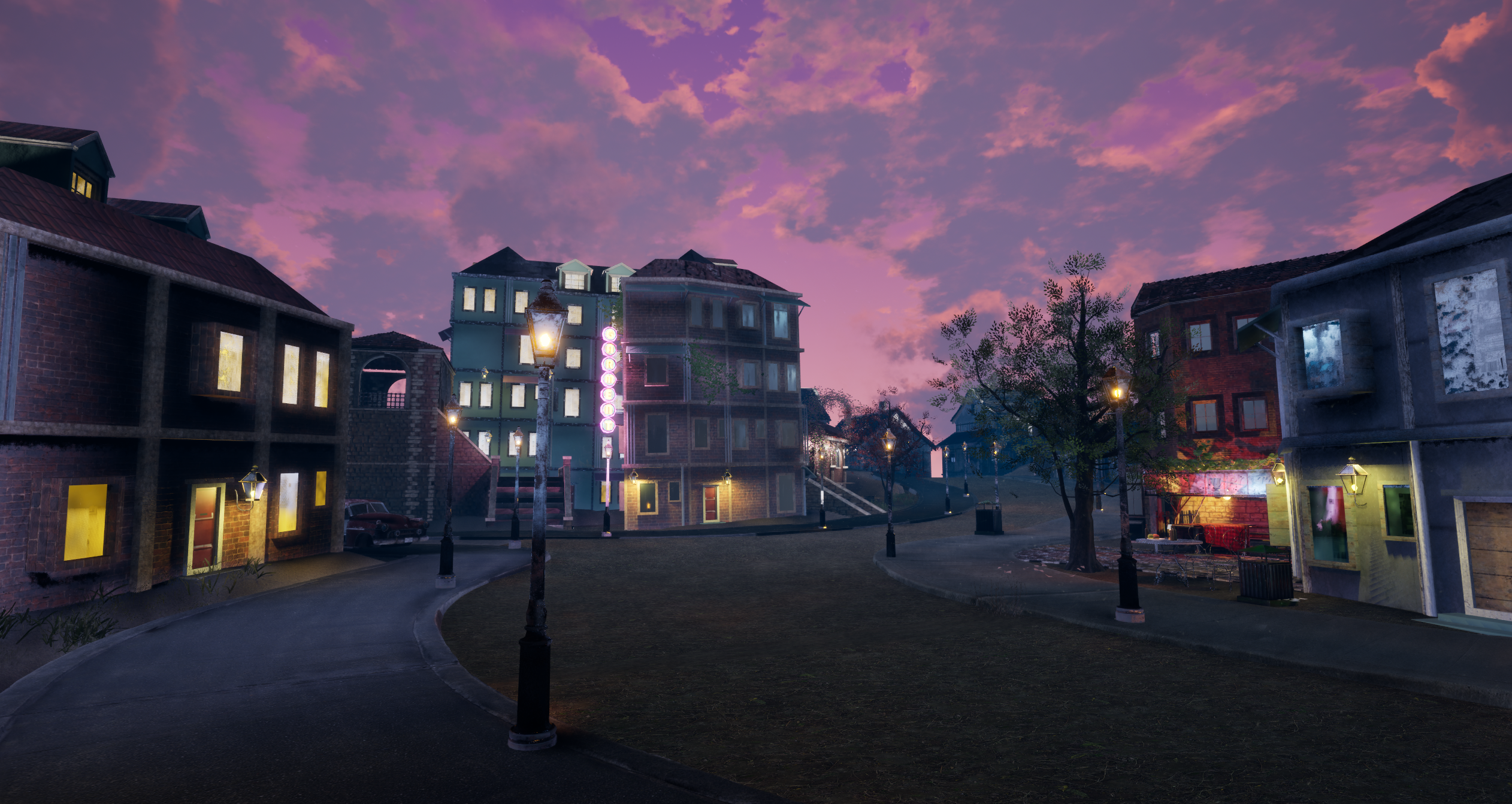
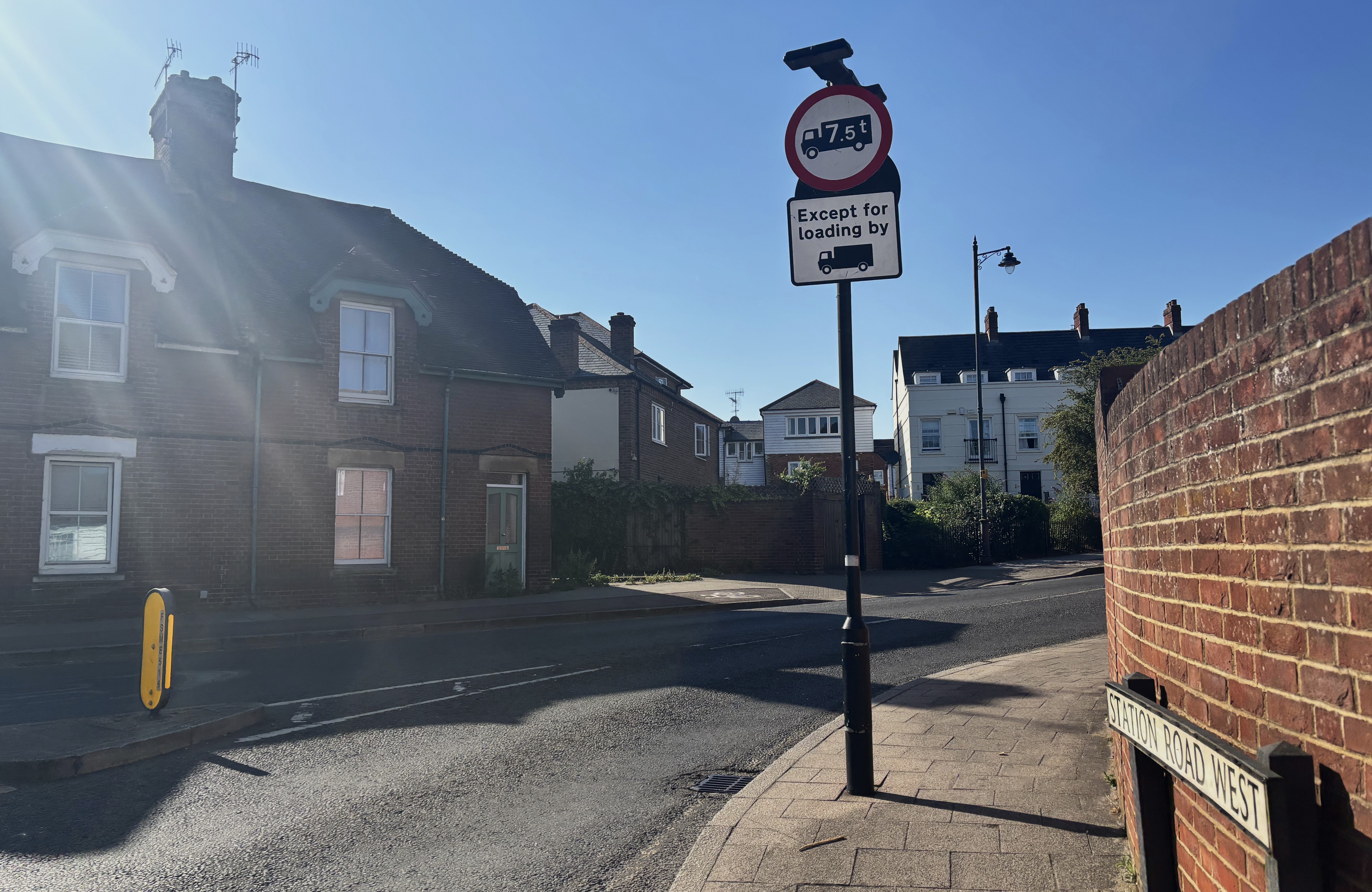
This personal project was inspired by the neighbourhood where I lived during my time in the UK. The red-brick houses repeatedly caught my attention and encouraged me to study how their footprints, facades, and street layout worked together.
The result is a two-stage Houdini Engine pipeline: one HDA creates and bakes building variants, while a second HDA distributes those assets along roads or riverbanks in Unreal Engine 5.
System Architecture
The two HDAs operate sequentially: the first produces a baked building library, and the second uses those Unreal assets to assemble the neighbourhood.
HDA 01 — Building Generator
Converts a closed footprint curve into a complete building with configurable floors, facades, openings, decorations, and roof forms, then bakes approved variants to Unreal assets.
HDA 02 — Neighbourhood Layout
Uses a road or river guide curve to generate placement points, select meshes from the baked building library, orient facades, and remove overlaps.
Baked Asset Library
Provides the hand-off between the two stages. Each approved building becomes a stable Unreal Static Mesh with a reusable asset reference.
Unreal Engine 5
Provides the production context for art direction, material assignment, lighting, asset review, and the final baked neighbourhood.
HDA 01 — Procedural Building Generator
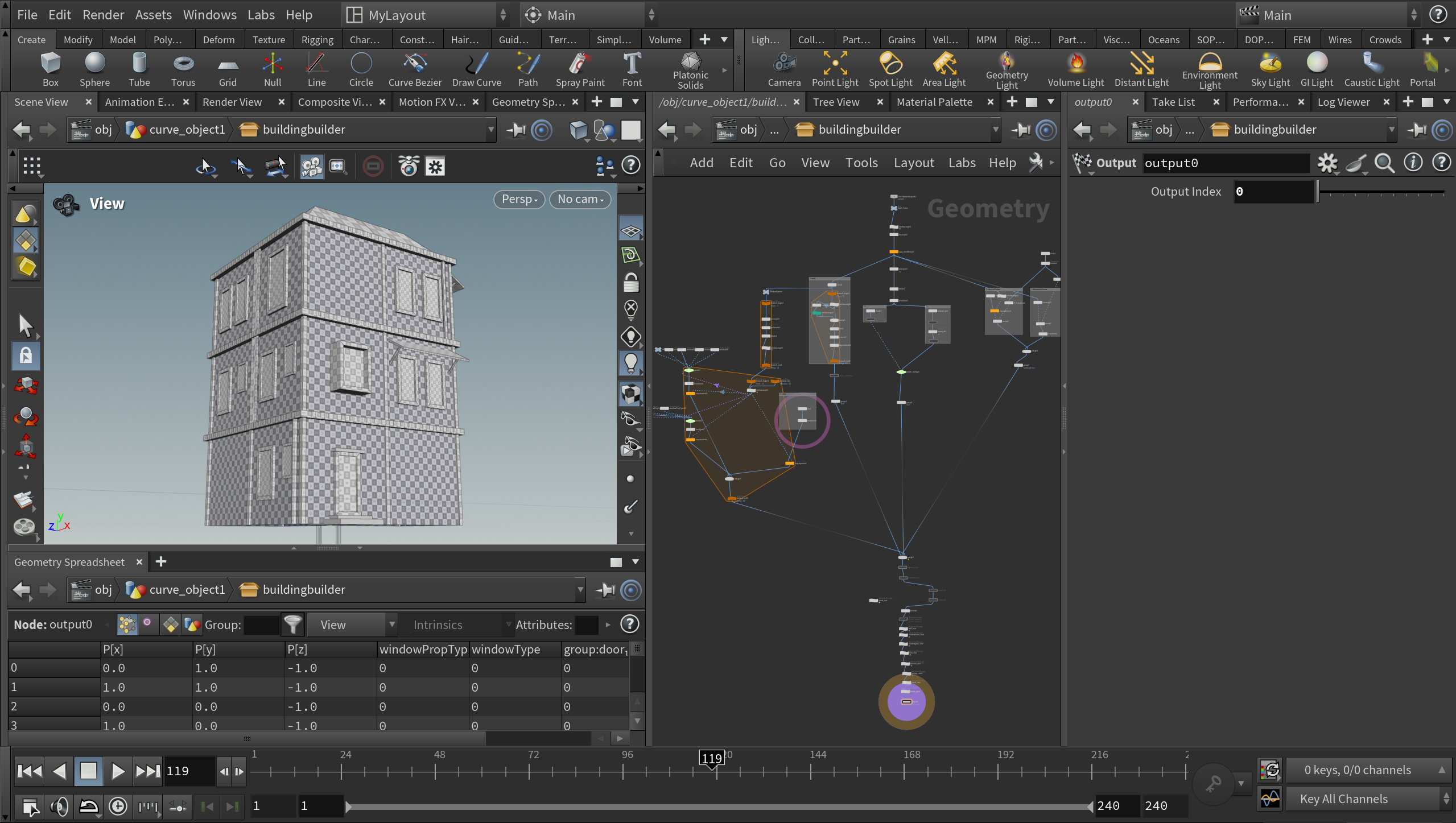
Each building begins with a closed curve edited in UE5. The HDA generates the walls, roof, windows, doors, frames, awnings, and facade details.
The exposed controls support rapid architectural variation without changing the underlying network:
- Footprint: Controls the building’s shape and proportions.
- Floor and Roof Controls: Define the number of storeys and the roof type, height, and inset.
- Facade Systems: Control windows, doors, frames, and decorative elements.
- Variation Seed: Produces alternative facade arrangements from the same footprint.
Building Generation in UE5
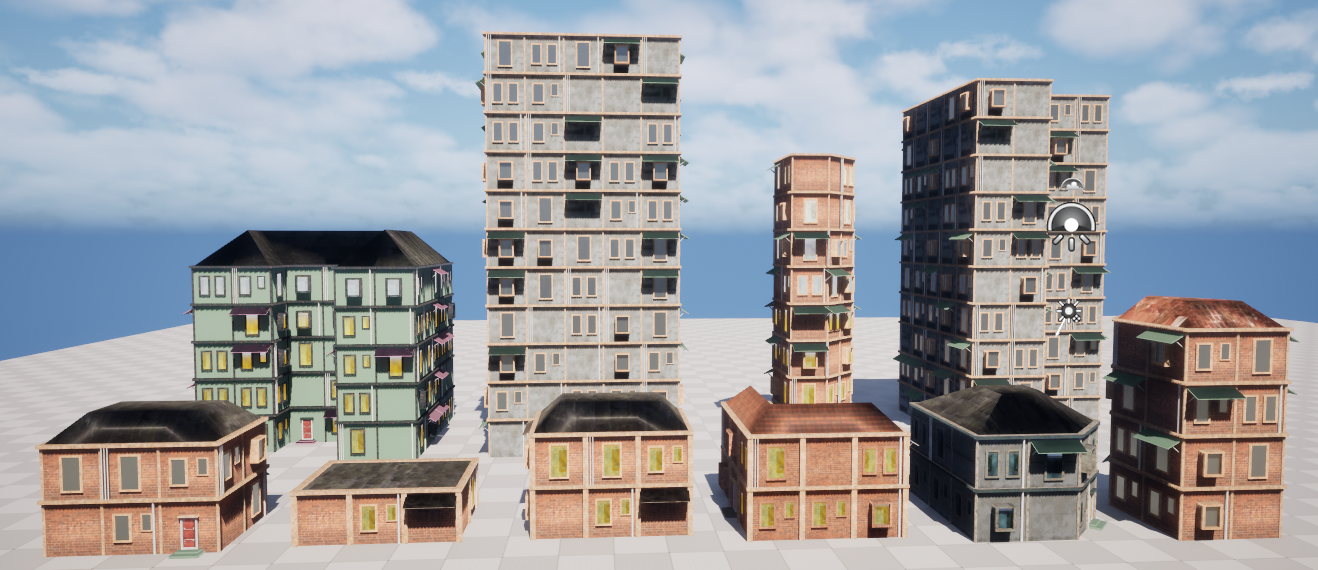
Houdini Engine recooks the building whenever its curve or parameters change, allowing the silhouette, scale, materials, and facade rhythm to be evaluated directly under Unreal lighting.
Different footprints, floor counts, roofs, materials, and seeds form a controlled library of building variants. Approved results are baked as Unreal Static Meshes with consistent pivots, scale, material slots, and asset paths.
HDA 02 — Neighbourhood Layout
At the environment scale, a guide curve defines the road or river. The layout HDA scatters points along both sides, selects compatible meshes from the baked library, orients their facades, applies controlled variation, and removes overlaps.
Each point stores a selected building reference through unreal_instance, together with its transform. Houdini Engine converts the result into Unreal instancers rather than duplicated Static Mesh Actors.
Why This Matters for Game Production
- Faster Building Production: A footprint and a small set of controls replace much of the repetitive manual modelling required for each building variant.
- Rapid Environment Iteration: Designers can adjust the guide curve, spacing, seed, and asset selection without rebuilding the neighbourhood by hand.
- Consistent Art Direction: Shared generation rules keep proportions, facade details, materials, and roof language coherent across the asset library.
- Scalable Level Assembly: One baked library can populate multiple streets or levels, making it easier to expand the environment with limited art resources.
- Performance-Aware Output: Unreal instancing supports large numbers of repeated buildings without duplicating every mesh in the level.